How Many Greek Islands Are There?
GNTO says 6,000 islands and islets, 227 of them inhabited; a count from the 2011 census finds 114 inhabited. Why the numbers differ, the eight groups, and 37 islands to start with.
There is no single count, because the sources do not agree on what counts as an island. The Greek National Tourism Organisation (GNTO), which runs visitgreece.gr, says Greece “includes 6,000 islands and islets scattered across the Greek seas, of which only 227 islands are inhabited”. Its page gives no year, no source, no minimum size and no definition of “inhabited”. The most careful count of inhabited islands comes from the 2011 census, and it arrives at 114.
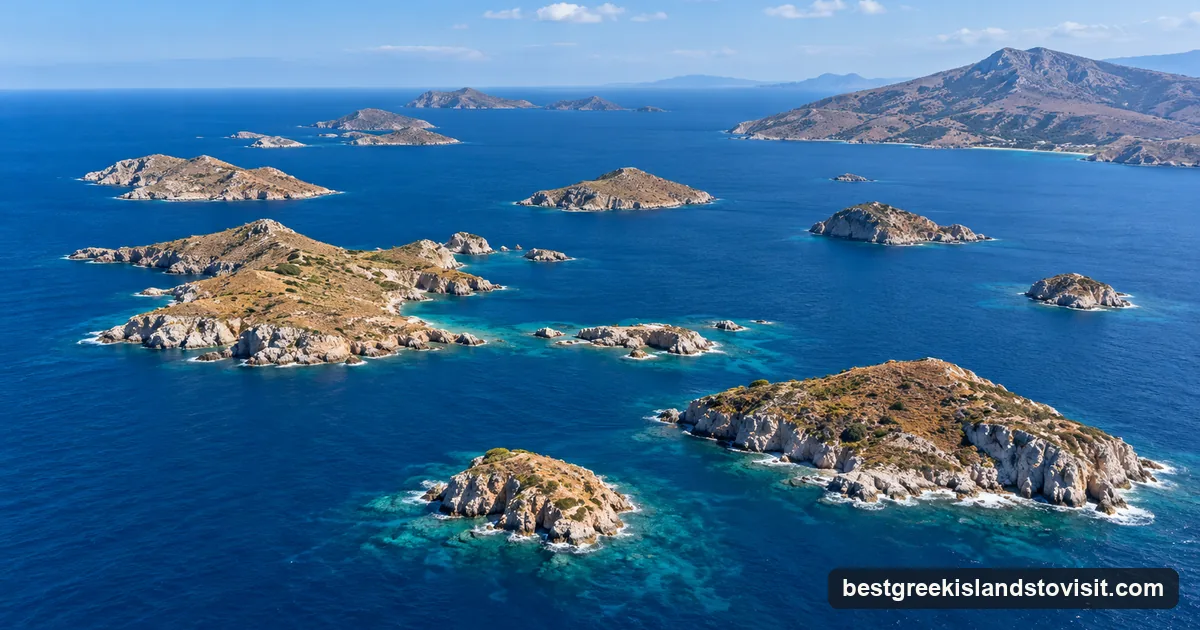
The counts and where they come from
| Count | Who says it | What it rests on |
|---|---|---|
| 6,000 islands and islets, 227 inhabited | GNTO (visitgreece.gr) | No year, size threshold or definition given |
| 114 inhabited islands, plus 440 uninhabited islets recorded as settlements | University of the Aegean, Atlas of the Islands | 2011 census data |
| 2,000-plus islands, about 250 inhabited | Lonely Planet (September 2025) | No method given |
| About 1,200 to 6,000 islands, 166 to 227 inhabited | English Wikipedia’s list of Greek islands | Collects other figures: 1,200 from Frommer’s, 166 from a Thomas Cook island-hopping guide, 6,000 and 227 from GNTO |
The spread in the totals comes from the size cut-off. Set a minimum size and the count falls toward 1,200; count every islet and it climbs toward 6,000. None of these sources states a threshold you could check, so any single total is a convention, not a measurement.
The inhabited count is firmer. Working from the 2011 census, the University of the Aegean’s atlas finds 114 islands with residents. Eighty of them have their own municipality or local community, and 34 appear only as settlements inside another unit. Together they cover 24,772.71 km², or 18.7% of Greece, and had 1,632,955 residents, 15.1% of the population. Another 440 islets are recorded as settlements with nobody living in them. We found no count based on the 2021 census. Condé Nast Traveler’s island guide, updated in March 2026, repeats GNTO’s 227.
The eight island groups
GNTO sorts the islands under eight headings. Administration does not always follow them, which matters when you read a regional notice or a ferry timetable.
- Argo-Saronic (GNTO writes Argosaronic): Salamina, Aegina, Agistri, Poros, Hydra and Spetses, “spanning the Saronic Gulf to the entrance of the Argolic Gulf”. Salamina’s short ferry from Perama carries about 8 million of the 20 million passengers a year who use the Port of Piraeus.
- Crete has a heading of its own. It is the largest Greek island.
- Cyclades: GNTO lists Santorini, Mykonos, Milos, Paros, Naxos, Ios, Sifnos, Folegandros and Amorgos, then Delos, Andros, Tinos, Syros, Kea, Kythnos, Serifos, Kimolos, Antiparos, Anafi, Sikinos, Thirasia and the Small Cyclades (Iraklia, Schinoussa, Donousa and Koufonisia). The group takes its name, GNTO says, from the circle it forms around Delos.
- Dodecanese: the name promises twelve islands, but GNTO lists 14 main ones (Rhodes, Kos, Kalymnos, Karpathos, Astypalea, Patmos, Leros, Tilos, Lipsi, Kasos, Symi, Nisyros, Chalki and Kastellorizo) plus smaller ones such as Telendos and Pserimos.
- Evia also stands alone. GNTO calls it the second-largest island of Greece, and two bridges at Chalkida tie it to the mainland.
- Ionian Islands: Corfu, Kefalonia, Ithaca, Zakynthos and Lefkada, with Paxi, Antipaxi, Meganisi, Kythira, Antikythira and the Diapontia islands. Kythira is Ionian by tradition but administered from Attica, together with the Argo-Saronic islands. The main Ionian islands are not served from Piraeus, Rafina or Lavrio; their ferries leave from Kyllini, Patras, Astakos and Igoumenitsa on the west side of the mainland.
- North Aegean: Lesvos, Chios, Samos and Thassos, with Limnos, Ikaria, Fournoi, Psara, Oinousses, Agios Efstratios and Samothrace. Thassos and Samothrace belong administratively to the Region of Eastern Macedonia and Thrace.
- Sporades: Skiathos, Skopelos, Alonnisos and Skyros. The first three are run from Thessaly, through its regional unit of Magnesia and Sporades.
What are the five largest Greek islands?
GNTO’s own island pages give the order: Crete is the largest, Evia second, Lesvos third, Rhodes fourth and Chios fifth. Crete alone covers about 8,336 km² and runs about 260 km from east to west. Two of the five have pages here, Crete and Rhodes.
Which is the nicest Greek island to go to?
No official body ranks them, and the guides agree on very little. Across GNTO, Lonely Planet, both Condé Nast titles and Rick Steves, only two calls are unanimous: Santorini for couples and Mykonos for nightlife. Crete is the family pick of both Condé Nast editions. Beyond that it depends on the trip you want, which is what the island chooser on our homepage sorts out. Couples have their own honeymoon guide.
What island was Mamma Mia filmed on?
Skopelos, in the Sporades. GNTO says film producers “chose to shoot scenes from Mamma Mia! here, making the island famous around the world”, and calls Skopelos the largest of the Northern Sporades, between Skiathos and Alonnisos. It has no airport. Flights land on neighbouring Skiathos, which handled 639,242 passengers in 2025, and boats link the two; SeaJets also sails from Volos on the mainland on a Volos, Skiathos, Skopelos and Alonnisos line. skopelosislandtour.com covers Skopelos’s boat days from Skiathos, the clifftop chapel of Agios Ioannis Kastri and Kastani beach.
Islands with airports, and islands without
In 2025, 28 airports on 26 islands had commercial flights. The big international gateways are Heraklion on Crete, where 4.05 million passengers got off international flights, Rhodes with 3.06 million and Corfu with 2.08 million. Paros, Naxos, Milos, Chios and Syros had next to no international flights, so you reach them through Athens or by sea.
Many islands have no airport at all: Ios, Folegandros, Amorgos, Symi, Patmos, Ithaca and Hydra among them. Lefkada is reached from Aktion airport on the mainland, over a floating bridge, and Thassos from Kavala by ferry. The islands map shows where the airports and ports are, and island hopping covers the ferries between them.
A list of Greek islands by group
These are 37 of the islands people ask about most, with GNTO’s group, the island’s airport code where it has one, and one fact each. Islands with a page on this site link to it.
| Island | Group | Airport | One fact |
|---|---|---|---|
| Aegina | Argo-Saronic | No airport | 40 minutes from Piraeus on Hellenic Seaways’ high-speed boat, 1 h 10 by conventional ferry |
| Poros | Argo-Saronic | No airport | GNTO’s route is a drive of about 2 h 15 from Athens to Galatas, then a short ferry; not the port of Poros on Kefalonia |
| Hydra | Argo-Saronic | No airport | Cars and motorbikes are not allowed (GNTO); only high-speed boats from Piraeus, 1 h 15 at the fastest |
| Spetses | Argo-Saronic | No airport | On Hellenic Seaways’ year-round high-speed line from Piraeus via Poros and Hydra |
| Crete | Crete | HER, CHQ, JSH | The largest Greek island; Heraklion took 4.05 million passengers off international flights in 2025 |
| Santorini (Thira) | Cyclades | JTR | Its villages line the rim of a caldera shaped by successive explosive phases (GNTO) |
| Mykonos | Cyclades | JMK | 1,222,748 cruise passengers in 2025, slightly more than Santorini |
| Milos | Cyclades | MLO | 80 beaches on GNTO’s couples page, “more than 70” on its Milos page and in Lonely Planet |
| Paros | Cyclades | PAS | GNTO says Parian marble was used for Praxiteles’ Hermes and the Venus de Milo |
| Antiparos | Cyclades | No airport | Car ferries leave Pounta on Paros every 15 minutes and take about 10 |
| Naxos | Cyclades | JNX | “The largest and most fertile island of the Cyclades” (GNTO), with the group’s highest mountain, Zas |
| Koufonisia | Cyclades | No airport | One of the Small Cyclades, which Lonely Planet suggests to couples looking for serenity |
| Ios | Cyclades | No airport | Locals call it Nios; tradition makes it the burial place of Homer (GNTO) |
| Sifnos | Cyclades | No airport | Known for pottery and its own cooking; the chef Nikolaos Tselementes came from here (GNTO) |
| Folegandros | Cyclades | No airport | The Hora sits about 200 m above the sea, on the edge of a cliff (GNTO) |
| Amorgos | Cyclades | No airport | Hozoviotissa Monastery stands 300 m above the sea; The Big Blue was filmed here (GNTO) |
| Syros | Cyclades | JSY | Lonely Planet’s island “especially for families” |
| Rhodes (Rodos) | Dodecanese | RHO | Its Medieval City has been on UNESCO’s World Heritage List since 1988 |
| Kos | Dodecanese | KGS | Birthplace of Hippocrates and the third-largest Dodecanese island (GNTO) |
| Symi | Dodecanese | No airport | Boats from Rhodes take about 45 minutes to 1 h 30 |
| Patmos | Dodecanese | No airport | Under a water-scarcity state of emergency since November 2025, extended in May 2026 |
| Kastellorizo | Dodecanese | KZS | Condé Nast Traveller’s UK edition names it for peace and quiet |
| Corfu (Kerkyra) | Ionian | CFU | Its Old Town has been on UNESCO’s World Heritage List since 2007 |
| Paxos (Paxi) | Ionian | No airport | The day cruise featured on the Corfu page moors at Gaios |
| Lefkada | Ionian | No airport (Aktion, PVK, on the mainland) | Joined to the mainland by a floating bridge (GNTO) |
| Kefalonia (Cephalonia) | Ionian | EFL | GNTO says Fiskardo was one of the few places on the island to escape the 1953 earthquake |
| Ithaca | Ionian | No airport | GNTO’s “land of Odysseus”, 31 minutes by ferry from Sami on Kefalonia |
| Zakynthos (Zante) | Ionian | ZTH | Navagio (Shipwreck Beach) is closed to landing and swimming until 31 October 2026 |
| Kythira | Ionian | KIT | Ionian by tradition but administered from Attica; SeaJets sails to Kissamos on Crete |
| Lesvos (Lesbos) | North Aegean | MJT | GNTO’s third-largest Greek island; its runway closes every Tuesday from 17 November 2026 to 23 March 2027 |
| Chios | North Aegean | JKH | GNTO’s fifth-largest Greek island; no international flights in 2025 |
| Samos | North Aegean | SMI | Lonely Planet’s label: “sweet wines and lush valleys” |
| Thassos (Thasos) | North Aegean | No airport (Kavala, KVA, on the mainland) | GNTO’s route: fly to Kavala, 1 h 10 from Athens, then a 1 h 40 ferry |
| Skiathos | Sporades | JSI | 639,242 airport passengers in 2025; boats continue to Skopelos and Alonnisos |
| Skopelos | Sporades | No airport | The largest of the Northern Sporades, where scenes from Mamma Mia! were shot (GNTO) |
| Alonnisos | Sporades | No airport | Lonely Planet’s pick for “underwater adventures” |
| Evia | Evia | No airport | The second-largest Greek island (GNTO), joined to the mainland by two bridges at Chalkida |
Sources: GNTO (visitgreece.gr island and group pages), the University of the Aegean’s Atlas of the Islands, Lonely Planet, Condé Nast Traveller (UK), Condé Nast Traveler (US), Rick Steves, HCAA and Fraport Greece airport statistics, ELIME cruise figures, the Port of Piraeus, the Environment Ministry’s emergency decisions and the ferry operators’ own pages. Checked October 2026.
Settled on an Island?
Each tour's calendar shows the dates it is actually running, with the price and that tour's cancellation terms; every tour listed here except the Lindos acropolis ticket can be cancelled for a full refund up to 24 hours before.
Compare the Tours, Island by Island